- Home
Edition
Africa Australia Brasil Canada Canada (français) España Europe France Global Indonesia New Zealand United Kingdom United States Edition:
Global
Edition:
Global
- Africa
- Australia
- Brasil
- Canada
- Canada (français)
- España
- Europe
- France
- Indonesia
- New Zealand
- United Kingdom
- United States
Academic rigour, journalistic flair
 New Africa / shutterstock
Can ‘miracle’ heaters really warm your home for pennies? The physics says no
Published: December 17, 2025 5.34pm GMT
Dylan Ryan, Edinburgh Napier University
New Africa / shutterstock
Can ‘miracle’ heaters really warm your home for pennies? The physics says no
Published: December 17, 2025 5.34pm GMT
Dylan Ryan, Edinburgh Napier University
Author
-
 Dylan Ryan
Lecturer in Mechanical & Energy Engineering, Edinburgh Napier University
Disclosure statement
Dylan Ryan does not work for, consult, own shares in or receive funding from any company or organisation that would benefit from this article, and has disclosed no relevant affiliations beyond their academic appointment.
Partners

Edinburgh Napier University provides funding as a member of The Conversation UK.
View all partners
DOI
https://doi.org/10.64628/AB.rdfgdytqg
https://theconversation.com/can-miracle-heaters-really-warm-your-home-for-pennies-the-physics-says-no-271818 https://theconversation.com/can-miracle-heaters-really-warm-your-home-for-pennies-the-physics-says-no-271818 Link copied Share articleShare article
Copy link Email Bluesky Facebook WhatsApp Messenger LinkedIn X (Twitter)Print article
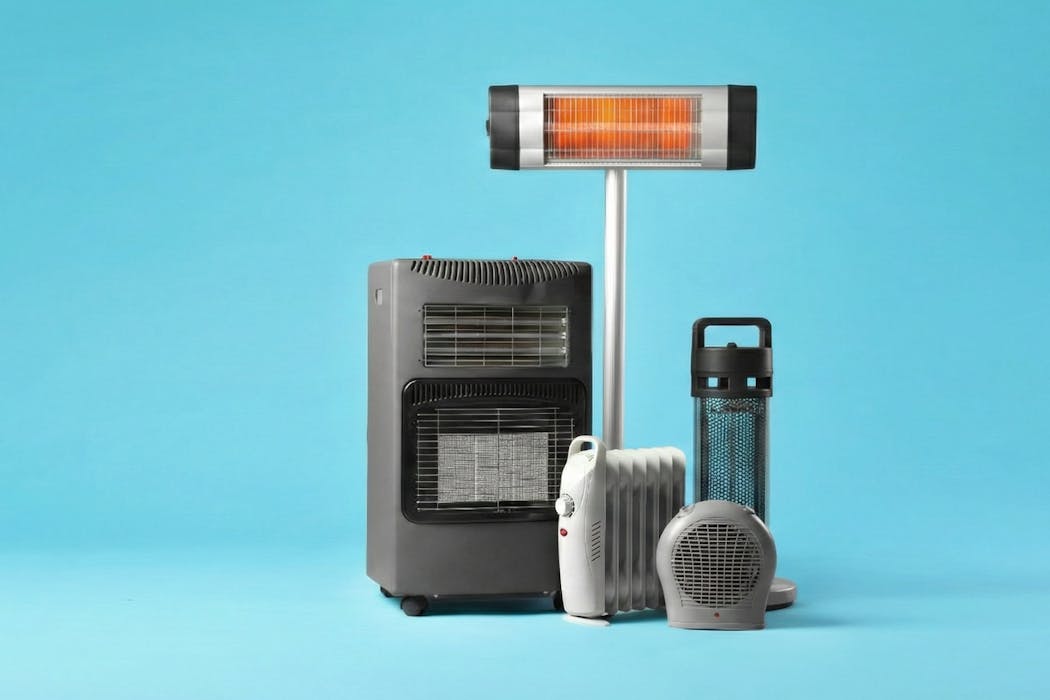
The internet is awash with adverts for various portable heaters, with claims that they will heat your house for pennies. Some are marketed as the “Tesla of the heating industry” (despite being nothing to do with Elon Musk’s carmaker), while others claim they can “heat up a house in three minutes”.
It’s an appealing message, particularly during cold snaps when energy bills are high and many households are looking for quick fixes. But are any of these claims remotely true?
The short answer is no. And the reasons why are rooted in some very basic physics.
One key detail often missing from these adverts: almost all electric heaters are already close to 100% efficient. That doesn’t mean they are cheap to run – only that nearly all the electricity they use ends up as heat.
Electric heaters work by passing a current through a wire, which then heats up. That heat is then transferred to the room either by warming the air (distributed with a fan) or by radiating heat directly from a hot surface. Even things that sound like “losses”, such as friction in a fan motor, still end up as heat inside the room.
This means there is no clever design or secret component that can make one plug-in heater fundamentally more efficient than another. Electricity use is almost entirely converted into heat. So when a product claims to heat more while using less electricity, alarm bells should ring.
‘Heating a house in three minutes’ breaks the laws of physics
Some adverts go further, claiming a small portable device can heat an entire house in just a few minutes. This is where the numbers really matter.
Heating a typical home means warming hundreds of cubic metres of air, as well as countering heat losses to the outside. That takes lots of energy. To do it quickly would require tens of kilowatts of power – far more than can be drawn safely from a standard household plug socket.
In practice, most portable heaters are deliberately limited to around 2 kilowatts or less, to avoid overheating wiring and sockets. That’s enough to warm a small room, but nowhere near enough to rapidly heat a whole house. Claims otherwise simply don’t stack up.
What’s actually inside these devices?
Independent reviewers and engineers have tested many of these viral heaters, and are not impressed. In one teardown, electrical engineer and YouTuber Clive Mitchell found that a widely advertised “miracle” heater only produced just 500-800 watts of heat – less than half the output of a standard plug-in heater.
In another case, Mitchell looked at a device so badly built he described it as an “automatic house igniter” (though technically that really would heat up your home in three minutes…). He said it partly in jest, but it is a serious issue: badly made electrical products can pose genuine fire risks, particularly if left running unattended.
This is one reason why consumer groups consistently recommend buying heaters that meet established safety standards, rather than relying on anonymous online brands with big claims and little accountability.
 Not a serious way to heat your home.
Art_Pictures / shutterstock
Not a serious way to heat your home.
Art_Pictures / shutterstock
Another internet trend involves using candles or tea lights to heat homes, often putting them inside various contraptions made from flower pots or tin cans. This is both dangerous and ineffective. Fire brigades have repeatedly warned against these setups, which pose obvious fire and carbon monoxide risks.
They are also expensive. A single tea light produces about 35 watts of heat. Even burning continuously, candles deliver heat at a far higher cost per kilowatt hour than electricity – and many times more than gas. Putting a tea light under a flower pot doesn’t change how much energy it releases.
What actually is the best way to heat your home?
Portable electric heaters do have a place. They are useful for short-term, localised heating, such as warming a home office or bedrooom for a few hours. Used carefully, they can be a practical supplement to central heating.
But they are not designed to heat entire homes continuously. Even if you rely on electricity for heating, wall mounted radiators are going to be much better for that. They are wired directly into the mains and can pull more power safely and reliably than you can get from a plugin device.
That said, even the best electric radiator is still expensive to run compared to a gas boiler. This brings us to a broader issue: households aren’t just missing a miracle heater. It’s that energy itself is too expensive.
Future solutions for home heating
Heat pumps are one electric technology that may genuinely change things. They work like a fridge in reverse, extracting heat from the outside air and pumping it into your home.
Because they move heat rather than generate it directly, a heat pump can move more heat than it takes electricity to operate. On average an air source heat pump will provide 2.7 kilowatts of heat for every kilowatt-hour of electricity expended. This works out to about a third of the carbon emissions of a gas boiler.
The downside is cost and complexity. Heat pumps are expensive to install and work best in homes that are already well-insulated. They’re not ideal for everyone, but they are one of the few technologies that genuinely offer long-term savings.
Wood burning stoves are another option, but there can be serious issues with air pollution. The price is highly variable and it is generally more expensive than regular heating.
Of course, the whole reason such adverts and social media trends pop up around now is because it’s cold and people are looking for solutions to heat their homes. But unfortunately, there aren’t any quick fixes.
The only real solutions are slower and unglamorous: better insulation, more efficient heating, and reforms to lower the cost of energy itself.
If a heater claims it can warm your whole home for pennies, it’s almost certainly too good to be true. Even the best heater cannot rewrite the rules of physics.
- Energy efficiency
- heaters
- Home heating
- Give me perspective
Events
Jobs
-
 Senior Lecturer, Autism & Neurodivergent Studies/Special Education
-
Manager, Graduations, Fees and Scholarships
-
Talent Integrity and Contracts Advisor
-
Respect and Safety Project Manager
-
Associate Dean, School of Information Technology and Creative Computing | SAE University College
 Senior Lecturer, Autism & Neurodivergent Studies/Special Education
 Manager, Graduations, Fees and Scholarships
 Talent Integrity and Contracts Advisor
 Respect and Safety Project Manager
 Associate Dean, School of Information Technology and Creative Computing | SAE University College
- Editorial Policies
- Community standards
- Republishing guidelines
- Analytics
- Our feeds
- Get newsletter
- Who we are
- Our charter
- Our team
- Partners and funders
- Resource for media
- Contact us
-
-
-
-
Copyright © 2010–2025, The Conversation
