- Pro
Trump wants hyperscalers and AI companies to pay their own way
When you purchase through links on our site, we may earn an affiliate commission. Here’s how it works.
 Image credit: Whitehouse.gov
(Image credit: Whitehouse.gov)
Image credit: Whitehouse.gov
(Image credit: Whitehouse.gov)
- Copy link
- X
- Threads
Sign up for breaking news, reviews, opinion, top tech deals, and more.
Contact me with news and offers from other Future brands Receive email from us on behalf of our trusted partners or sponsors By submitting your information you agree to the Terms & Conditions and Privacy Policy and are aged 16 or over.You are now subscribed
Your newsletter sign-up was successful
An account already exists for this email address, please log in. Subscribe to our newsletter- The White House has introduced the Ratepayer Protection Pledge
- The pledge seeks to avoid the cost of energy from data centers being passed on to American consumers
- Many of the biggest tech and AI companies have already signed
The White House has put forward a voluntary commitment for private companies to bear the cost of rising electricity prices due to the increased demand for data centers to power AI.
The Ratepayer Protection Pledge will encourage private companies to “build, bring, or buy” new energy sources to offset the demand from data centers.
The pledge has already been signed by several of the biggest hyperscalers and AI companies, including Amazon, Google, Meta, Microsoft, OpenAI, Oracle, and xAI.
You may like-
 Trump asks tech companies to “pay their own way” for their data centers
-
 'AI companies shouldn’t leave American ratepayers to pick up the tab': Anthropic says it will cover electricity price increases caused by its data centers
-
 "Tech companies have paid lip service" - US government is asking AI giants why data centers are leading to rising bills
The Ratepayer Protection Pledge
The pledge outlines that private companies will be able to build their own energy sources in the US to cover their electricity usage in order to avoid passing the costs of energy and infrastructural demand on to consumers. This means that private companies will also have to cover the cost of the infrastructure upgrades needed to meet their demand.
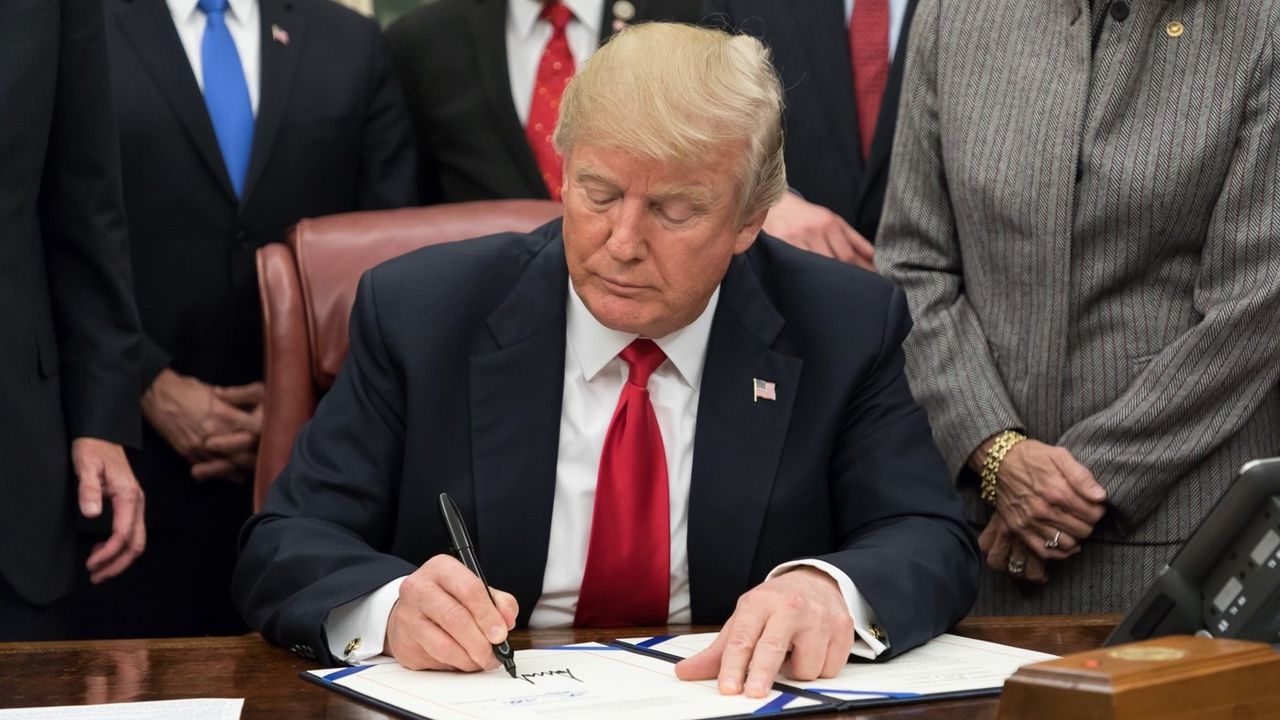
At the signing event for the Ratepayer Protection Pledge, President Donald Trump said, “This means that the tech companies and the data centers will be able to get the electricity they need, all without driving up electricity costs for consumers. This is a historic win for countless American families and we’ll also make our electricity grid stronger and more resilient than ever before.”
President Trump also commented on the future of energy prices for Americans, stating, “They’re not going to be going up. They’re going to be actually going down. In short, America’s largest and richest tech companies will be funding a colossal expansion of U.S. energy.”
How have prices risen so far?
According to the US Energy Information Administration, retail energy prices in the US have risen faster than the rate of inflation since 2022, with the average US family’s electricity bill rising 7% year-over-year since September.
Are you a pro? Subscribe to our newsletterContact me with news and offers from other Future brandsReceive email from us on behalf of our trusted partners or sponsorsBy submitting your information you agree to the Terms & Conditions and Privacy Policy and are aged 16 or over.
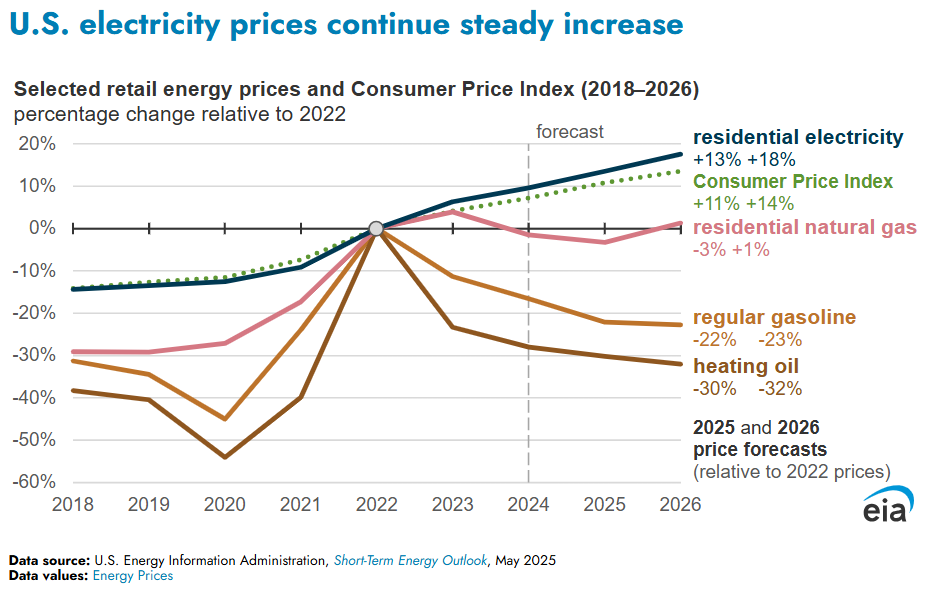
However, areas with significantly higher data center projects have seen prices skyrocket by as much as 267% over the last five years. Whether these areas will see their prices “to be actually going down” remains to be seen.
What energy sources will be built?
The Trump administration has been skeptical of the human effect on climate change, with Trump revoking the ruling that greenhouse gases are harmful to human health in February of this year. The administration has also cut subsidies on renewable energy, and has introduced an expedited approval process for new fossil fuel energy projects.
Environmental restrictions on coal, oil, and gas have also been lifted, with Trump’s National Energy Dominance Council (NEDC) securing $15 billion in funding for new energy projects in the Mid-Atlantic and Midwest to potentially reopen coal and natural gas plants closed under the Biden administration.
What to read next-
 "We will set a high bar" - Microsoft reveals multiple new data centers, and promises your energy bills won't go up to pay for them
-
 OpenAI promises to keep Stargate data center costs down - so your utility bills shouldn't go sky high...probably
-
 "There is 'no way'" - IBM CEO says current AI data center trends are unsustainable, and he would know
Private companies are likely to take this as a clear indication of the types of energy Trump would like private companies to build, despite renewable sources remaining the cheapest option even with the cut in government subsidies. If companies were to turn to renewable energy sources it would likely harm Trump’s stance on “unreliable, foreign controlled” energy sources.
Outside of fossil fuels or renewables, there remains another option: nuclear. Long term, nuclear is the option numerous US tech companies are betting on. In late 2024, Microsoft signed a deal with the Three Mile Island nuclear plant to supply energy for Redmond’s AI computing demand, with the plant likely to reopen as soon as 2027.
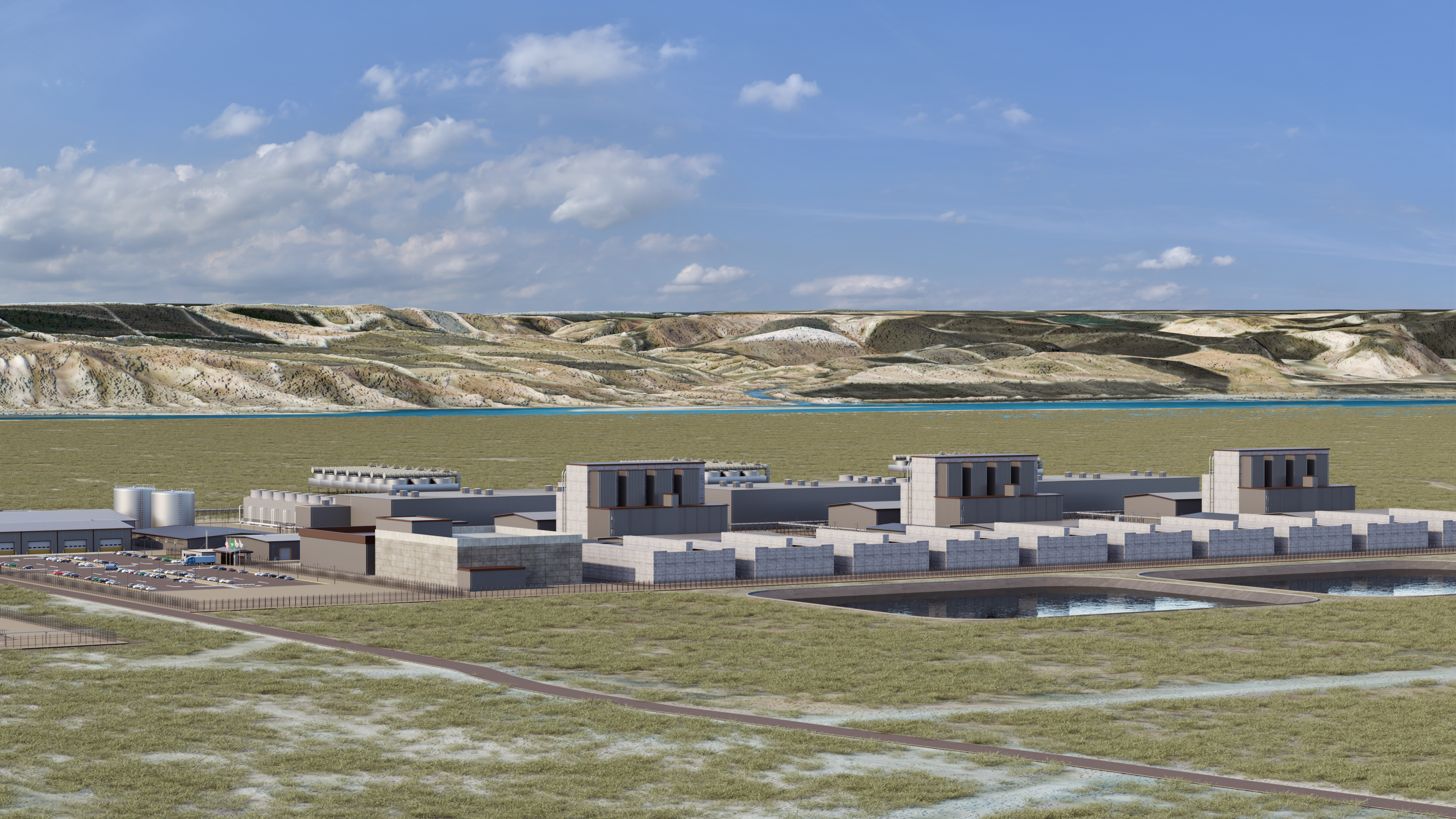
Meta has also shown its ambitions to power data centers with nuclear energy. The company signed a 20-year deal with the Clinton Clean Energy Center to supply 1,121 megawatts of "emissions-free nuclear energy." Other nuclear options include the use of small modular reactors (SMR), with Amazon pledging to build twelve SMRs in order to supply 1GW of output by the next decade, with plans to supply a total of 5GW US grid by 2039.
The question remains on whether supply chains will be able to keep up with the demand from private companies seeking to build new energy projects as part of the pledge. High-voltage transformers, turbines, and other complex electrical equipment are currently cheaper to import than to build in the US. Trump’s desire for ‘America first’ industry may be put at odds with companies seeking to upgrade energy infrastructure in the US.
How will companies be held accountable?
Currently, the Pledge is voluntary and holds no legal binding.
The pledge does not lay out any mechanisms of accountability, timelines, or provisions on how much additional energy private companies will be required to provide alongside the demand for their data centers.
We will have to wait and see if this is fleshed out at all, or if the Pledge is simply a stunt to improve short-term public opinion by taking advantage of existing individual commitments by tech companies to prevent energy price increases.
There is also the question of additional costs incurred by states themselves. In order to attract investment by tech companies, many states have offered incentives in return for data center construction, such as tax exemptions on purchased equipment and construction, as well as business credits for local employment.
However, the newly incurred cost of having to build and supply their own energy could lead companies to demand additional incentives and rate cuts - which could effectively force states to trade tax revenue for an energy grid capable of meeting demand - especially as demand for data centers outstrips current supply.
 The best cloud storage for all budgetsOur top picks, based on real-world testing and comparisons
➡️ Read our full guide to the best cloud storage1. Best overall:IDrive2. Best lifetime value:pCloud3. Best for syncing:Sync.com
TOPICS AI Benedict CollinsSocial Links NavigationSenior Writer, Security
Benedict has been with TechRadar Pro for over two years, and has specialized in writing about cybersecurity, threat intelligence, and B2B security solutions. His coverage explores the critical areas of national security, including state-sponsored threat actors, APT groups, critical infrastructure, and social engineering.
Benedict holds an MA (Distinction) in Security, Intelligence, and Diplomacy from the Centre for Security and Intelligence Studies at the University of Buckingham, providing him with a strong academic foundation for his reporting on geopolitics, threat intelligence, and cyber-warfare.
Prior to his postgraduate studies, Benedict earned a BA in Politics with Journalism, providing him with the skills to translate complex political and security issues into comprehensible copy.
View MoreYou must confirm your public display name before commenting
Please logout and then login again, you will then be prompted to enter your display name.
Logout Read more
Trump asks tech companies to “pay their own way” for their data centers
'AI companies shouldn’t leave American ratepayers to pick up the tab': Anthropic says it will cover electricity price increases caused by its data centers
"Tech companies have paid lip service" - US government is asking AI giants why data centers are leading to rising bills
"We will set a high bar" - Microsoft reveals multiple new data centers, and promises your energy bills won't go up to pay for them
OpenAI promises to keep Stargate data center costs down - so your utility bills shouldn't go sky high...probably
"There is 'no way'" - IBM CEO says current AI data center trends are unsustainable, and he would know
Latest in Pro
 Adobe Lightroom Classic (2026) review: Perfect photo organization with time-saving AI at it's best - but it can be hit and miss
 Munbyn RealWriter 405B dual-color thermal printer review
 Microsoft warns of new signed malware which deploys remote monitoring tools as backdoors
 Chinese hackers hide malware within Windows and Google Drive to hit government targets
 Airlines don’t have an AI problem. They have a foundational technology problem
 Florida woman given major jail sentence for illegally selling Microsoft product keys
Latest in News
Florida woman given major jail sentence for illegally selling Microsoft product keys
Latest in News
 The rare Nintendo PlayStation hardware prototype that was never released has been acquired by The National Videogame Museum
 'A liability trap' — NordVPN slams Utah age verification law targeting VPN users
 Control Resonant gameplay designer says 'this not a soulslike' but an 'action-driven' sequel that leans heavily on melee and supernatural abilities — 'The player is very much in charge'
 ‘Let us cook’ — Crimson Desert asks fans to wait longer for PS5 footage
 The Division 2: Warlords of New York expansion will be available for all players during the series' Anniversary Season alongside a new, limited-time Realism Mode that is 'a reflection of what has always sat at the heart of The Division'
 Dutch MPs call for free government-backed VPN, ad-blocker, and password manager for all citizens
LATEST ARTICLES
Dutch MPs call for free government-backed VPN, ad-blocker, and password manager for all citizens
LATEST ARTICLES- 1‘The American people should not be footing the bill for the benefit of private companies': Tech giants sign White House pledge to not pass on data center electricity costs to consumers - here's everything you need to know
- 2'A liability trap' — NordVPN slams Utah age verification law targeting VPN users
- 3The rare Nintendo PlayStation hardware prototype that was never released has been acquired by The National Videogame Museum
- 4Adobe Lightroom Classic (2026) review: Perfect photo organization with time-saving AI at it's best - but it can be hit and miss
- 5Chinese hackers hide malware within Windows and Google Drive to hit government targets