
- Pro
Agentic AI’s promise balanced against privacy and security risks
When you purchase through links on our site, we may earn an affiliate commission. Here’s how it works.
 (Image credit: Shutterstock)
Share
Share by:
(Image credit: Shutterstock)
Share
Share by:
- Copy link
- X
- Threads
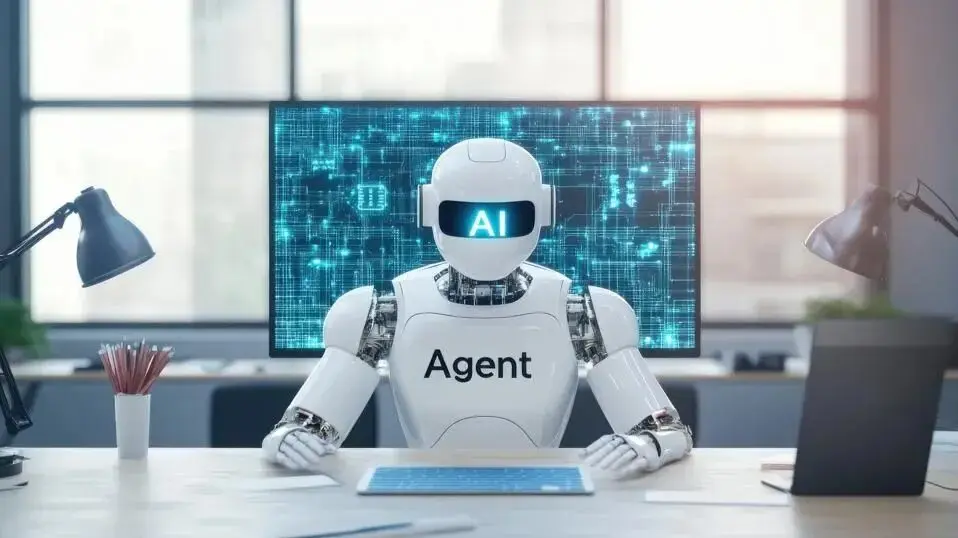
Agentic AI is an artificial intelligence system that can act independently to achieve goals without constant human oversight.
These systems are able to make decisions, perform actions and adapt to changing conditions on their own when programmed correctly.
Keeley CrockettSocial Links NavigationLeading IEEE expert and professor of computational intelligence at Manchester Metropolitan University.
They operate by interpreting goals, breaking them into sub-goals and then working out the best way to achieve them. Their agency comes from this ability to act autonomously without continuous instruction.
You may like-
 The rise of agentic AI in cybersecurity
-
 The power and potential of agentic AI in cybersecurity
-
 I’m an AI expert and here’s why agentic AI is moving from hype to ROI… and how to deploy it safely at scale
As they execute tasks, agentic systems also learn and refine their responses, becoming more effective over time.
Facing the potential risks
Agentic AI systems are already in daily use, often handling large volumes of sensitive information. In fact, a recent IEEE survey forecasted that by 2026 agentic AI will reach mass or near-mass adoption by consumers in 2026.
In healthcare, for example, the technology is used to support administrative processes, reviewing and organizing clinical data. However, this level of interaction with personal data raises legitimate privacy concerns. Without clear alignment to GDPR principles, an agentic system could collect more data than necessary or attempt to bypass legal safeguards.
Beyond the risk of compliance violations, Agentic AI’s potential access to highly sensitive data makes it an appealing target for bad actors.
Are you a pro? Subscribe to our newsletterContact me with news and offers from other Future brandsReceive email from us on behalf of our trusted partners or sponsorsBy submitting your information you agree to the Terms & Conditions and Privacy Policy and are aged 16 or over.Unlike typical business applications, these systems don’t just collect location, payment, health, biometric and contact data - they also build detailed profiles from user behavior and preferences, pulling information from multiple sources. This wealth of personal data can be weaponized to manipulate both the system and its user.
Threats from compromised systems
If a threat actor were to hijack an agentic AI, they could do far more than access personal data. They could actively influence a person’s behavior. For example, by taking over a chatbot, they might engage in behavioral nudging, gradually manipulating someone’s choices by shaping the content they see, spreading misinformation or steering them toward specific purchases or even harmful content.
The risks escalate if an attacker gains control of an AI system set up to operate autonomously. A compromised agent could impersonate its user by sending automated emails, texts or voice messages on their behalf. In the case of smart home integration, it could even interfere with door locks, alarms or security cameras, with a direct impact on personal safety.
You may like-
The rise of agentic AI in cybersecurity
-
The power and potential of agentic AI in cybersecurity
-
I’m an AI expert and here’s why agentic AI is moving from hype to ROI… and how to deploy it safely at scale
Beyond hijacking, adversaries could also poison the data that trains an agentic AI, feeding it biased or hostile inputs designed to warp its outputs. Over time, this could lead to inaccurate, misleading or potentially harmful decisions.
In each of these scenarios, malicious access could result in blackmail, harassment or identity theft. This is a strong illustration of how virtual attacks on agentic AI can quickly create serious real-world consequences.
Mitigating the danger
Organizations that utilize agentic AI systems have a responsibility to operate systems safely with appropriate guardrails. Although the potential threats are significant, their impact can be reduced.
Users must become more data-savvy and avoid complacency, particularly when relying on agentic AI. For highly sensitive information, it may be safer to opt out of using such systems for decision-making altogether.
Where these systems are used, users should review terms and conditions carefully, ensure transparency over what data is being processed, and understand how automated decisions are reached. Prioritizing systems that clearly explain their reasoning helps reduce the risk of hidden data practices and strengthens user control.
A double-edged sword
Agentic AI has the potential to transform industries and streamline everyday tasks. With 96 percent of global technology leaders agreeing that agentic AI innovation, exploration and adoption will continue at lightning speed in 2026, managing the risks will be more important than ever.
These systems must be deployed ethically and safely, with human oversight at every stage. Their development should include transparency protocols and clear processes for explaining automated decisions.
By recognizing the risks and committing to responsible use, we can harness the benefits of agentic AI while safeguarding users.
We've featured the best AI tools currently available.
TOPICS AI Chatbot Keeley CrockettSocial Links NavigationLeading IEEE expert and professor of computational intelligence at Manchester Metropolitan University.
Show More CommentsYou must confirm your public display name before commenting
Please logout and then login again, you will then be prompted to enter your display name.
Logout Read more The rise of agentic AI in cybersecurity
 The power and potential of agentic AI in cybersecurity
 I’m an AI expert and here’s why agentic AI is moving from hype to ROI… and how to deploy it safely at scale
 How Zero Trust can help organizations manage mounting agentic AI security risk
Gen AI is becoming a major security worry for all firms - here's how your business can stay safe
Why agentic AI pilots stall – and how to fix them
Latest in Pro
How Zero Trust can help organizations manage mounting agentic AI security risk
Gen AI is becoming a major security worry for all firms - here's how your business can stay safe
Why agentic AI pilots stall – and how to fix them
Latest in Pro
 This dangerous North Korean malware has now split into three entities for maximum impact
 Marquis confirms data breach, point finger of blame at SonicWall firewall
 Over 175,000 publicly exposed Ollama AI servers discovered worldwide - so fix now
 KYY X90E portable monitor review
 Data sovereignty creates an illusion of security: the real battle is software integrity
 The biggest DDoS attack ever has been detected - but fortunately you probably barely noticed it
Latest in Opinion
The biggest DDoS attack ever has been detected - but fortunately you probably barely noticed it
Latest in Opinion
 How the heck did phones become so boring? Looking at you, Apple and Samsung — but at least there’s hope on the horizon
 Tesla thinks you might mistake its next Optimus robot for a human
 Beyond cracked screens: how device protection can evolve to cover our digital lives
 Digital friction is quietly crippling UK productivity, and AI could be the turning point
 Step aside Avengers: Doomsday, Wonder Man has given me the most unhinged idea
 ‘You’ll rarely experience spy-movie stealth or the constant frustration of corporate geofences.’ How 24 hours connected to a VPN changed my perspective on personal data security
LATEST ARTICLES
‘You’ll rarely experience spy-movie stealth or the constant frustration of corporate geofences.’ How 24 hours connected to a VPN changed my perspective on personal data security
LATEST ARTICLES- 1Does wireless charging kill your phone’s battery? Scientists explain the pros and cons of going cable-free
- 26 new 4K Blu-rays from January 2026 to add to your collection
- 3How to choose your perfect small business payroll software
- 4FiiO's new elite hi-res audio player will delight you, provided you serve it only the best – but disappoint it at your peril
- 5How the heck did phones become so boring? Looking at you, Apple and Samsung — but at least there’s hope on the horizon