- Home
Edition
Africa Australia Brasil Canada Canada (français) España Europe France Global Indonesia New Zealand United Kingdom United States Skip to content Edition:
Global
Edition:
Global
- Africa
- Australia
- Brasil
- Canada
- Canada (français)
- España
- Europe
- France
- Indonesia
- New Zealand
- United Kingdom
- United States
Academic rigour, journalistic flair
 Shot Stalker/Shutterstock
Mock the Week’s return can’t compete with memes in the new age of political satire
Published: January 30, 2026 4.53pm GMT
James Brassett, University of Warwick
Shot Stalker/Shutterstock
Mock the Week’s return can’t compete with memes in the new age of political satire
Published: January 30, 2026 4.53pm GMT
James Brassett, University of Warwick
Author
-
 James Brassett
Reader in International Political Economy, University of Warwick
Disclosure statement
James Brassett does not work for, consult, own shares in or receive funding from any company or organisation that would benefit from this article, and has disclosed no relevant affiliations beyond their academic appointment.
Partners

University of Warwick provides funding as a founding partner of The Conversation UK.
View all partners
DOI
https://doi.org/10.64628/AB.v5kxsa946
https://theconversation.com/mock-the-weeks-return-cant-compete-with-memes-in-the-new-age-of-political-satire-274338 https://theconversation.com/mock-the-weeks-return-cant-compete-with-memes-in-the-new-age-of-political-satire-274338 Link copied Share articleShare article
Copy link Email Bluesky Facebook WhatsApp Messenger LinkedIn X (Twitter)Print article
Just as jokes wear thin by repetition, the return of Mock the Week to TV screens via Freeview channel TLC is unlikely to excite many beyond a small circle of fans. The format is the tried and tested panel quiz, where two teams of comedians compete by improvising witty takes on global events. But this light entertainment model of news satire is a throwback, conceived in a world where politics was only a background buzz for people’s day to day lives.
With 24/7 news and social media, the digital relay of politics is continuous, interactive, and, thanks the circulation of memes, already suffused with irony and satire. For good or ill, we experience global politics intimately and instantaneously via our smart phones.
We will have already forgotten the best memes about Donald Trump long before one of Mock the Week’s panellists gets up to wryly ask if he will change the name of Greenland to Orange-Land?
Indeed, as the host Dara O’Briain quipped about the previous cancellation of the show in 2022: “The storylines were getting crazier and crazier – global pandemics, divorce from Europe, novelty short-term prime ministers … We just couldn’t be more silly than the news was already.”
The implications of this “commodification of politics” are vast and go well beyond the fortunes of Mock the Week. Critical commentators have noted the usual list of issues with the format, including the difficulty of being original when the best online jokes regularly go viral, a potential for political clubbish-ness, and legal and commercial constraints about obscenity and offence. There is also the deeper shift in the nature of humour and politics to comprehend.
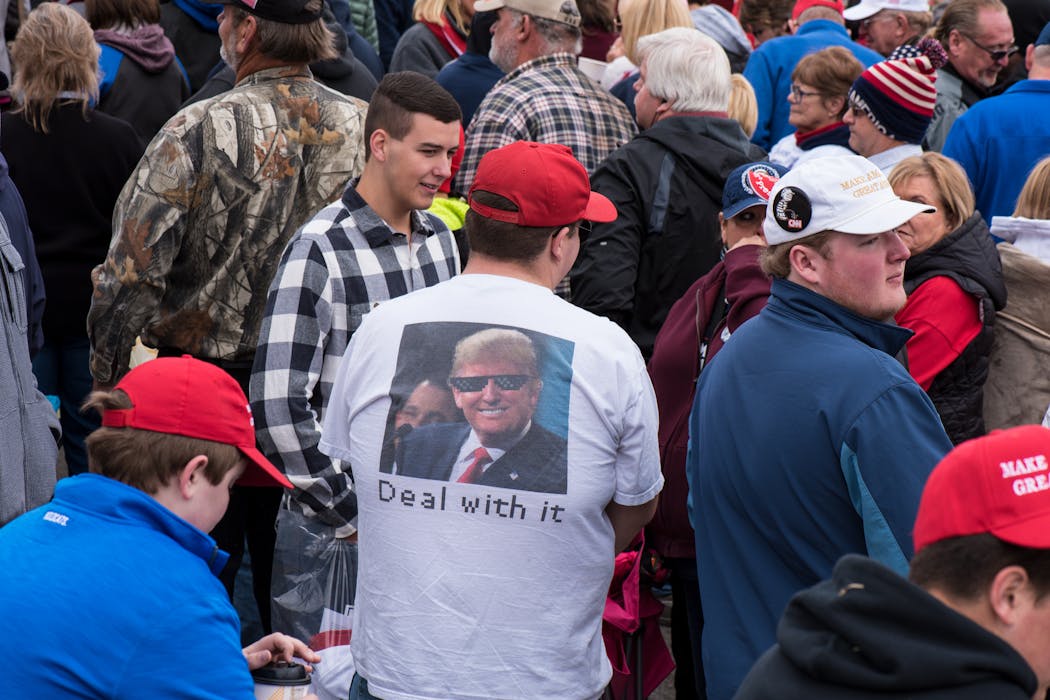
The digital form of humour in global politics has migrated to memes, their production, circulation and, importantly, their interactive potential. For instance, the ecology of memes about J.D. Vance, the vice president of the United States, includes both the ridiculous images (fat-Vance, goth-Vance, for example) but also, AI extensions where he dances while drinking hot dog juice.
With widely available and easy to use apps, anyone can play along, contributing to and amplifying satirical currents. In the process, online meme-makers are changing our understanding of how the public engage with global politics.
An ability to use memes effectively is fundamentally reshaping several areas of global politics including digital diplomacy, foreign policy and nationalist politics.
While we’re used to thinking about satire as a check on political excess or corruption, like a form of “comic resistance”, the trend in recent years has seen politicians like Boris Johnson and Trump “take the lead” in deploying jokes and memes.
It has become commonplace, if slightly unfair, to blame the rise of Johnson on his regular appearances on Have I Got News for You, the comedy panel news show taught him, according to writer Jonathon Coe: “The best way to make sure that satire aimed at you is gentle and unchallenging is to create it yourself.”
This is part of a broader shift in digital diplomacy whereby politicians and political institutions have used humour to communicate their messages through social media. On one hand, this is because jokes and memes can circulate beyond the traditional demographics of politics to engage the young, the old, and the increasingly important “conspiratorial” vote.
On the other hand, humour can both communicate across as well as deepen the cognitive divides that permeate contemporary events. Think of the emergence of racist humour throughout the COVID pandemic, which targeted Chinese people, or, relatedly, the central role of ridicule in disciplining “anti-vax”.
In that sense, it’s no surprise that humour has also been a key language in the growing use of hybrid warfare by states like Russia, China, and Nato in relation to the Ukraine war. Russian media has often delighted in the ability of its leading satirical pranksters to get access to and record conversations with senior British politicians about their (nuclear) strategy in Ukraine.
Of course, nowhere is this satirical agency more pronounced than in the current return of nationalist politics in general and the rise of Maga, in particular. Trump’s genius in this may be an ability to play both sides of the joke to his advantage.
Take the recent memes about US imperialism that saw “the stars and stripes” placed on a map over Venezuela, Canada and Greenland, which did two things.
First, they gratify and mobilise a base that enjoys a strong image of America, one that acts, because, to use the online catchphrase, “you can just do things”. Second, as supporters of Trump never tire of reminding us, much of his foreign policy follows the negotiating technique famously mapped out in his book The Art of Deal: aim high, don’t worry if things get messy, wait until people meet you half way.
With the addition of memes, this technique is able to reach previously unimaginable levels of effectiveness. It’s a signal form of politics, where satire is the agent of sovereign power.
Ironically, of course, these growing synergies between humour and global politics may lead some to seek sanctuary in the comfort of light entertainment. After all Mock the Week is just some comedians having fun and telling jokes. Some regard news satire within the larger educational function of critical journalism, an affective space where audiences can reflect on the high stakes of global politics.

Looking for something good? Cut through the noise with a carefully curated selection of the latest releases, live events and exhibitions, straight to your inbox every fortnight, on Fridays. Sign up here.
- Comedy
- Politics
- Memes
- TV
- Satire
Events
Jobs
-
 RMIT EOI for Aboriginal & Torres Strait Islander peoples
-
University Librarian
-
Video Commissioning Editor
-
Postdoctoral Research Fellow or Research Fellow
-
Lecturer / Sr. Lecturer / A/Professor in Statistics for Omics
 RMIT EOI for Aboriginal & Torres Strait Islander peoples
 University Librarian
 Video Commissioning Editor
 Postdoctoral Research Fellow or Research Fellow
 Lecturer / Sr. Lecturer / A/Professor in Statistics for Omics
- Editorial Policies
- Community standards
- Republishing guidelines
- Analytics
- Our feeds
- Get newsletter
- Who we are
- Our charter
- Our team
- Partners and funders
- Resource for media
- Contact us
-
-
-
-
Copyright © 2010–2026, The Conversation