- Home
Edition
Africa Australia Brasil Canada Canada (français) España Europe France Global Indonesia New Zealand United Kingdom United States Skip to content Edition:
Global
Edition:
Global
- Africa
- Australia
- Brasil
- Canada
- Canada (français)
- España
- Europe
- France
- Indonesia
- New Zealand
- United Kingdom
- United States
Academic rigour, journalistic flair
 CHAIWATPHOTOS/Shutterstock
Animals might be sentient in the law’s eyes, but how they’re treated still varies hugely
Published: January 30, 2026 4.53pm GMT
Angus Nurse, Anglia Ruskin University
CHAIWATPHOTOS/Shutterstock
Animals might be sentient in the law’s eyes, but how they’re treated still varies hugely
Published: January 30, 2026 4.53pm GMT
Angus Nurse, Anglia Ruskin University
Author
-
 Angus Nurse
Professor of Law and Environmental Justice, Anglia Ruskin University
Disclosure statement
Angus Nurse has received research funding from animal welfare organisations including the International Fund for Animal Welfare (IFAW) the RSPCA and Humane World for Animals (formerly called Humane Society International). He is an independent member of the Wild Animal Welfare Committee (WAWC)
Partners

Anglia Ruskin University (ARU) provides funding as a member of The Conversation UK.
View all partners
DOI
https://doi.org/10.64628/AB.rqtfutggm
https://theconversation.com/animals-might-be-sentient-in-the-laws-eyes-but-how-theyre-treated-still-varies-hugely-272579 https://theconversation.com/animals-might-be-sentient-in-the-laws-eyes-but-how-theyre-treated-still-varies-hugely-272579 Link copied Share articleShare article
Copy link Email Bluesky Facebook WhatsApp Messenger LinkedIn X (Twitter)Print article
Caged hens will be a thing of the past. Puppy farming will be stopped. New laws will enforce humane slaughter standards. All this is part of a new animal welfare strategy for England announced by the government in December 2025.
The prospect of new animal welfare laws and better enforcement shows an intention to improve animal welfare standards and reduce animal suffering.
This follows the adoption into UK law in 2022 of the idea that animals are sentient beings. The Animal Welfare (Sentience) Act means that government has to check whether its policies consider and minimise any negative consequences for animal welfare. Other jurisdictions that have recognised animal sentience include the EU, New Zealand and parts of Canada and Australia.
But the wording of the law rarely means animal welfare should actually be prioritised. Instead, it means that animal welfare must be considered and properly taken into account. Where policy fails to do this it could be argued that there has been a failure in the decision-making process.
Ultimately, despite the legal recognition of sentience, the variety of welfare laws and policies highlights that how we treat animals still differs depending on their type and on how humans value or act around them.
The UK’s animal sentience committee, the official body that scrutinises the government’s animal welfare policy, recently identified some areas where policy falls short of properly considering animal welfare – for example, through inconsistent monitoring and enforcement of animal welfare standards. The committee also suggested there were “substantial” gaps in animal welfare enforcement.
Read more: How the world might look if animals had legal rights
Although animal sentience is recognised in law, animals are still treated as “things” in law and policy. While they have some protections, many people still consider them as our property. This is despite laws that create animal welfare standards and try to reduce animal harm by requiring the consideration of animal needs.
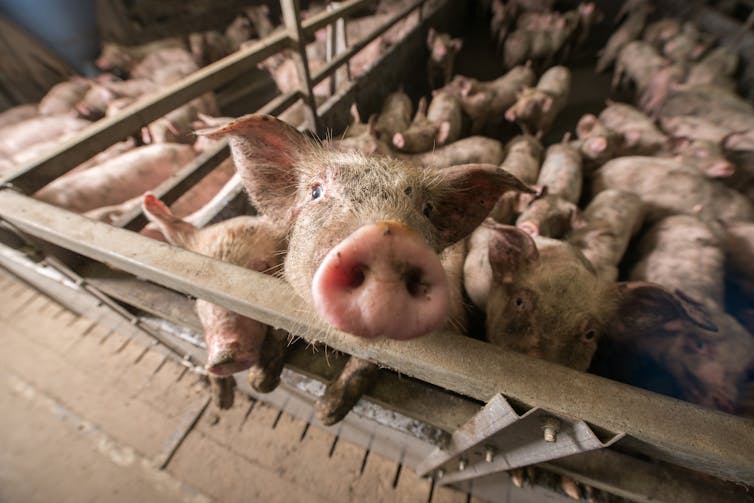 Pigs are often farmed in crowded conditions.
Mark Agnor/Shutterstock
Pigs are often farmed in crowded conditions.
Mark Agnor/Shutterstock
When animals are viewed as food or needed to make products like milk or clothing, their sentience might not carry much weight. Clearly animals kept for meat will be killed but in this case, laws will usually require that slaughter is carried out “humanely” and that animals should suffer as little as possible before death.
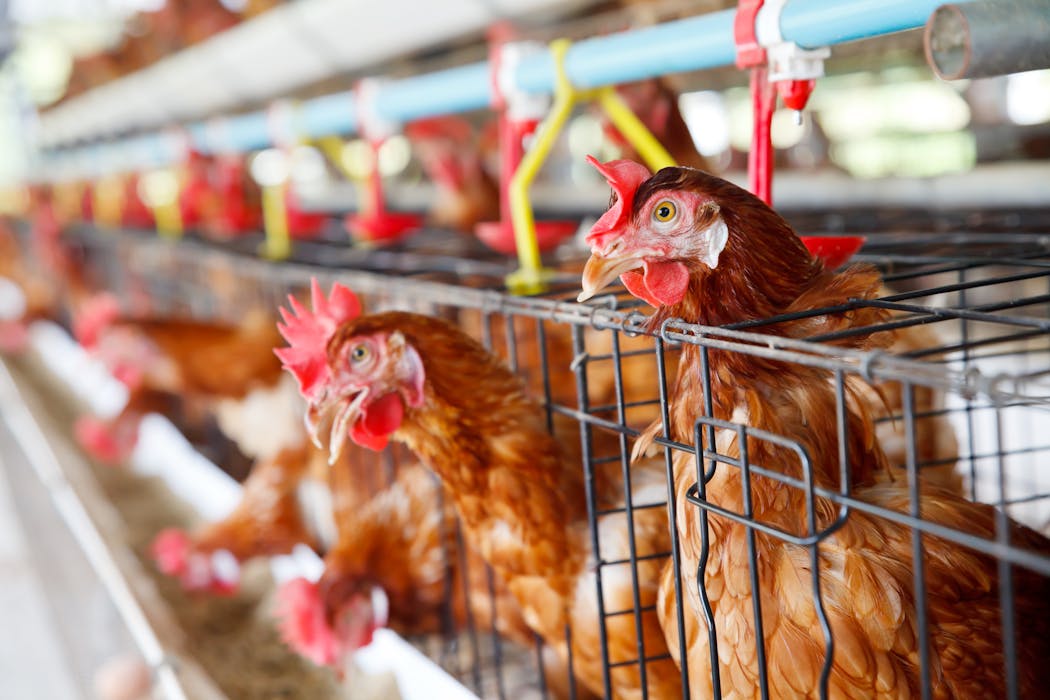
Battery cages for poultry were banned in the UK in 2012, but “colony cages” (those that allow a larger number of hens to be kept in close proximity) are still allowed despite being considered by animal campaign groups and activists as cruel.
Some animals, such as crows or grey squirrels, are regarded as “pests” so that they can be killed or taken to protect human interests. Some controls are permitted as part of wildlife management to protect livestock or crops, for example and can be covered by what’s known as a general licence.
Specific animals can be killed or taken without a clear identification and justification of the necessity of management or control. The law also allows control of pests on your property – this can include using poisons as long as the law is followed.
Five freedoms
Wild animals tend to be treated differently to companion animals like dogs and cats, which get more protection than wildlife mainly because they depend on humans for food and shelter. The law gives these companions a type of rights by creating legal obligations, sometimes creating a duty of care towards them.
The UK’s Animal Welfare Act (2006) does more than just prevent animal cruelty. It creates a duty for people who own or care for companion animals to actively provide animal welfare.
These so-called “thin” rights are a limited form of rights that mean if you have a companion you must cater for the specific needs of your animals and ensure that the individual animal’s needs are met according to the “five freedoms”. These were developed in the 1960s following a major government report into the welfare of intensively farmed animals.
The five freedoms were then formally established by the Farm Animal Welfare Council – the independent body that has advised the UK government – as the basis of good animal welfare. These include freedom from hunger and thirst, discomfort, pain, disease and distress.
Read more: Animal sentience bill is necessary for the UK to be a true world leader in animal welfare
Thin rights are different to “thick” rights whereby the law protects all of an animal’s fundamental interests such as an absolute right to life – such as the right not to be killed for human clothing or to be killed to benefit human commercial interests. The thick approach would prevent most actions that would interfere with an animal’s rights.
A logical conclusion of applying thick rights would be an abolition of most if not all animal use, including the use of animals for food. The late animal rights lawyer Steven Wise argued that “without legal personhood, one is invisible to civil law. One has no civil rights. One might as well be dead”. A thick approach gives animals rights not to be treated as “things”.
Author George Orwell wrote in his 1945 book, Animal Farm, “All animals are equal, but some animals are more equal than others.” He might have meant it as satirical comment on the Soviet Union, but the limitations of legal sentience for animals means it can be applied in a more literal way today. If we truly believe that all sentient creatures deserve protecting, the world has a long way to go to put this into practice.

Don’t have time to read about climate change as much as you’d like? Get a weekly roundup in your inbox instead. Every Wednesday, The Conversation’s environment editor writes Imagine, a short email that goes a little deeper into just one climate issue. Join the 47,000+ readers who’ve subscribed so far.
- Animal welfare
- Animal cruelty
- Animal sentience
Events
Jobs
-
 RMIT EOI for Aboriginal & Torres Strait Islander peoples
-
University Librarian
-
Video Commissioning Editor
-
Postdoctoral Research Fellow or Research Fellow
-
Lecturer / Sr. Lecturer / A/Professor in Statistics for Omics
 RMIT EOI for Aboriginal & Torres Strait Islander peoples
 University Librarian
 Video Commissioning Editor
 Postdoctoral Research Fellow or Research Fellow
 Lecturer / Sr. Lecturer / A/Professor in Statistics for Omics
- Editorial Policies
- Community standards
- Republishing guidelines
- Analytics
- Our feeds
- Get newsletter
- Who we are
- Our charter
- Our team
- Partners and funders
- Resource for media
- Contact us
-
-
-
-
Copyright © 2010–2026, The Conversation